The henna night
Across North Africa, the Swahili coast, and the Cape, the bride’s hands and feet are adorned with henna on a music-filled night before the wedding, surrounded by the women of both families.
Does your family know it this way?
The names it answers to
- Laylat al-ḥennaArabic
- AzmomegTamazight · Amazigh henna rites
- Usiku wa hinaKiswahili
What happens
- 1
The gathering of women
Female relatives and friends assemble at the bride’s home with food, drums, and ululation; in Swahili practice the somo (bridal instructor) presides.
- 2
The application
An artist draws the patterns; a small coin or the groom’s initials may be hidden in the design. Elders take turns blessing the bride as the henna dries.
- 3
The songs and counsel
Wedding songs alternate with frank marriage advice from married women: the night is equal parts party and induction.
WHY
Henna marks the threshold: the deeper the stain, the deeper the blessing carried into the marriage.
The women-only room passes down knowledge about marriage that has no other official classroom.
WHYs are plural by design: your family may hold another. Dispute or add below; disagreement is recorded, never erased.
Who practices it
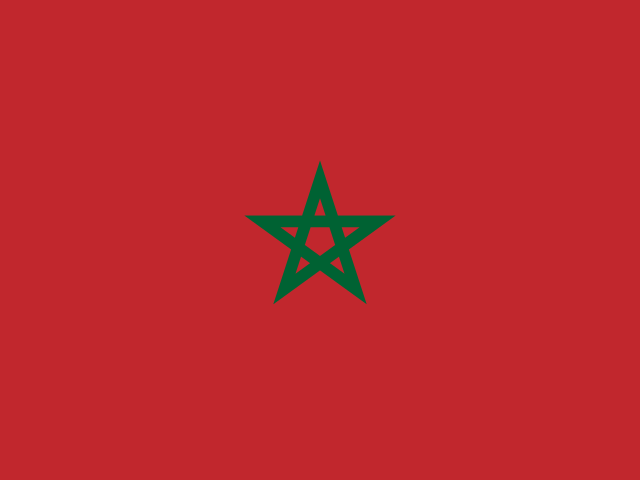
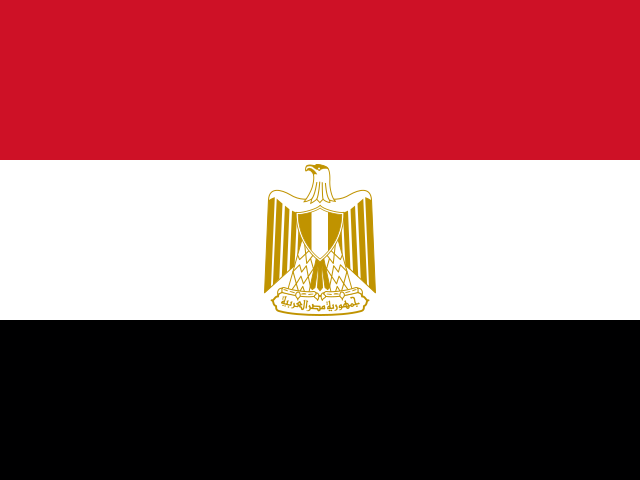
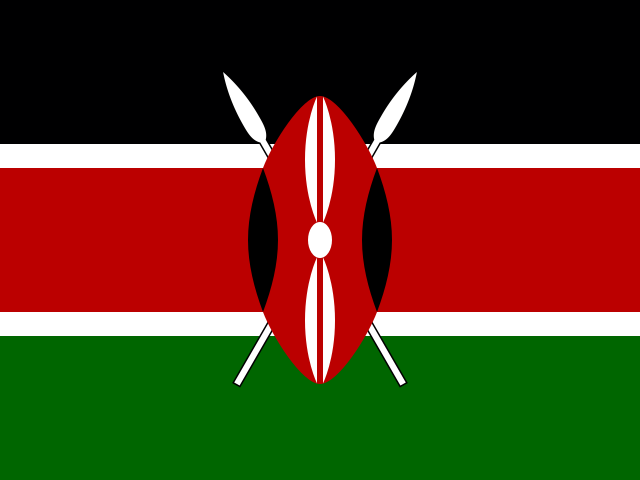

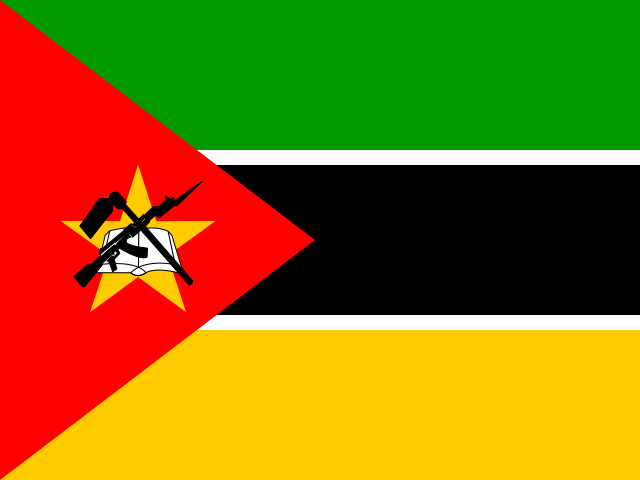


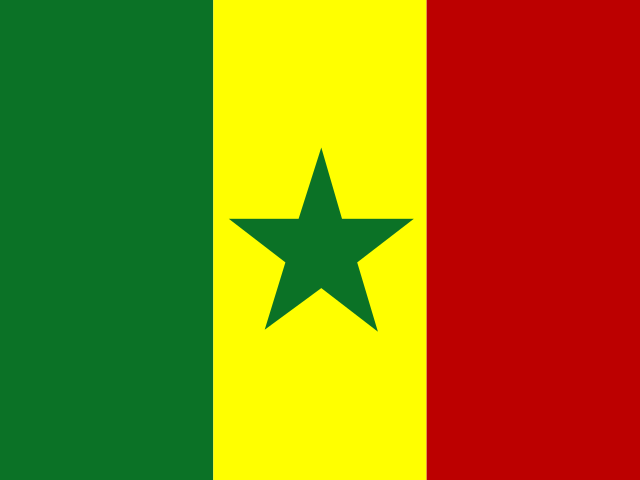

- Variant: Cape Malay medora nights, Moroccan azmomeg, Egyptian laylat al-henna, and Swahili usiku wa hina share the form with local songs and patterns.
On the body
A garment worn for this custom.
Provenance
- generated: 2026-07-04
- source: Model-knowledge aggregation pass (2026-07-04); unverified, awaiting community affirmation.
This entry is a hypothesis awaiting its people. If your family does it differently, that difference is exactly what we want recorded.
Nearby in the library
Sunan jariri · the Hausa naming day
On the seventh day the Hausa family gathers after dawn prayers; a ram is slaughtered, the child’s head may be shaved, and the malam whispers the name with the call to prayer in the child’s ear.
Hausa · Fulani · Muslim communities of Africa



Ngente · the Wolof naming day
The Senegalese eighth-day celebration: the child is named in the morning rite, and the afternoon becomes a grand social feast where the griot proclaims the name and lineage.
Wolof · Muslim communities of Africa

Sebou · the Egyptian seventh-day welcome
Egypt’s seventh-day celebration, older than Islam and Christianity in the Nile valley: the baby is carried in procession with candles, sieved and gently instructed, amid song and noise to make the child brave.
Egyptians · Coptic Orthodox Christians · Muslim communities of Africa