Oromo
The largest people of Ethiopia; the gadaa age-grade system is UNESCO-listed.
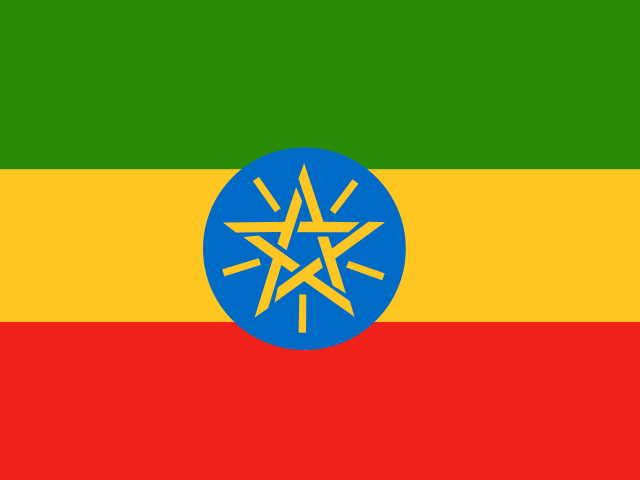 Ethiopia
 KenyaAfaan Oromoo
Customs they practice
10 recorded rites, each with its steps and its WHY.
Gadaa · the Oromo age-grade republic
The Oromo gadaa system moves male generations through eight-year grades of learning, service, and rule: a full civic education in which authority is held for one term and then handed on. UNESCO lists it as intangible heritage.
Oromofor men
Telosh and melse · the Ethiopian wedding cycle
The Habesha wedding is a multi-day cycle: elders ask for the bride (shimglina), the telosh gifting evening, the wedding itself, and the melse where the couple appears in traditional dress among family.
Amhara · Tigrinya · Oromo +1
Buna · the Ethiopian coffee ceremony
The Ethiopian and Eritrean ritual of hospitality: green beans roasted over coals before the guests, ground, and brewed in the jebena; three rounds are served, and to leave before the third is to walk out on the blessing.
Amhara · Tigrinya · Oromo +1
Jilaa · Coming of Age
Jilaa is a rite of passage marking a boy's transition to manhood, involving a series of tests and ceremonies to prove his courage, strength, and wisdom. This process typically occurs around the age of 15-16 and is essential for a boy to be considered a full member of Oromo society.
Oromofor men
Buttaa · Naming Ceremony
Buttaa is a naming ceremony for newborns, typically held on the eighth day after birth, where the child is given a name and blessed by the community. This ceremony is significant as it formally introduces the child to the community and seeks blessings for the child's future.
Oromo
Hammana · Wedding Ceremony
Hammana is the Oromo wedding ceremony, which involves a series of rituals and celebrations to unite two individuals in marriage. The ceremony is a joyous occasion that brings together the families and friends of the bride and groom.
Oromo
Siinqee · Women's Institution
Siinqee is a women's institution that plays a significant role in Oromo religious and social life, focusing on the worship of the female deity and the promotion of women's rights and empowerment. It is a vital part of Oromo culture and identity.
Oromofor women
Yaada · Funeral Rites
Yaada refers to the funeral rites performed for the deceased, which include mourning rituals and the burial ceremony. The process is designed to show respect for the deceased and to help the grieving family and community find closure.
Oromo
Guduruu · Community Gathering
Guduruu is a community gathering where people come together to discuss community affairs, resolve disputes, and socialize. It is an integral part of Oromo social life, fostering unity and cooperation.
Oromo
Irreechaa · Thanksgiving Ceremony
Irreechaa is a thanksgiving ceremony to express gratitude for the blessings of the past year and to welcome the new season. It is a time for the Oromo people to come together and celebrate their heritage and the fertility of the land.
Oromo
What they eat
2 dishes, what they mean and when they appear.
Injera
A large, spongy, faintly sour flatbread made from fermented teff, spread across the whole table as both plate and utensil for every meal.
Amhara · Tigrinya · Oromo +1
Buna
Coffee roasted, ground, and brewed fresh in front of guests as the centrepiece of the Ethiopian and Eritrean coffee ceremony, served in three deliberate rounds.
Amhara · Oromo · Ethiopian & Eritrean Orthodox
Names from this tradition
25 names in the decoder, meaning first.
Bariso
machine drafthe is teacher
Given nameOromo (Ethiopia)
Dhaba
machine draftgold
Given nameOromo (Ethiopia)
Galaana
machine draftocean
Given nameOromo (Ethiopia)
Jirella
machine draftmy shadow
Given nameOromo (Ethiopia)
Kadiro
machine draftearly morning
Given nameOromo (Ethiopia)
Nagessa
machine drafthe is king
Given nameOromo (Ethiopia)
Obbo
machine draftfather
Given nameOromo (Ethiopia)
Shanoo
machine draftgood news
Given nameOromo (Ethiopia)
Tilahun
machine drafthe is worthy of praise
Given nameOromo (Ethiopia)
Waqgari
machine drafthe is gold
Given nameOromo (Ethiopia)
Abebech
machine draftFlower
Given nameOromo (Ethiopia)
Diba
machine draftMountain
Given nameOromo (Ethiopia)